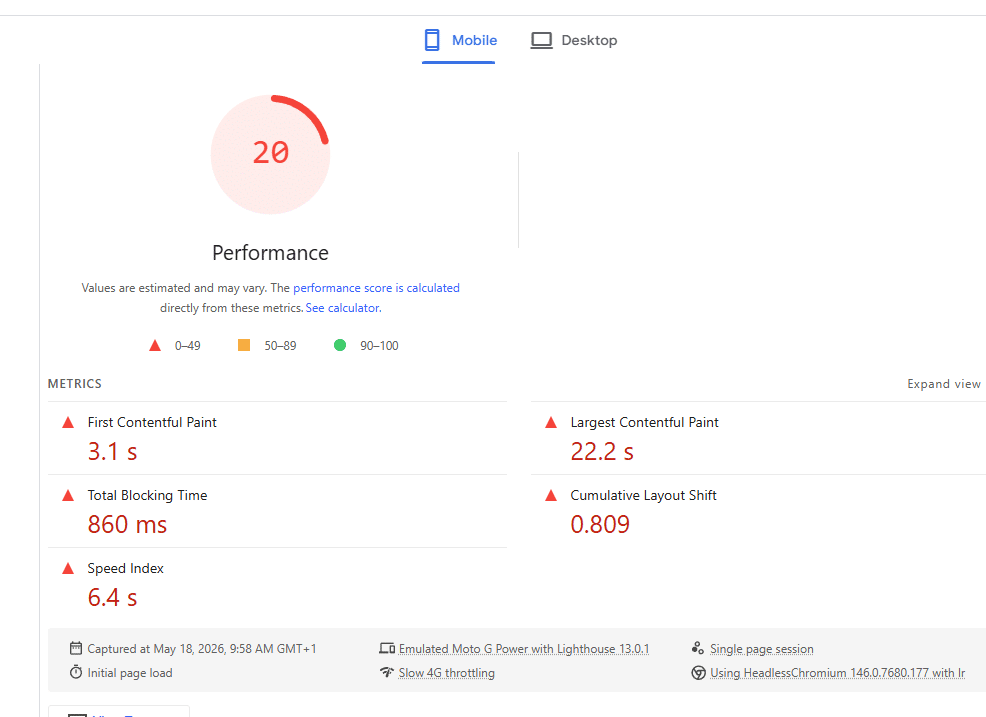

Website running slow? Low performance scores?
Before jumping straight into development work (and spending valuable time and budget), it’s worth stepping back and reviewing the foundations first, particularly your hosting environment.
Start by asking your hosting provider these key questions:
1. What resources are allocated to your website?
– CPU (processing power)
– RAM (memory)
– PHP limits (how efficiently your site can handle requests)
2. What type of hosting are you on?
– Shared server (cheaper, but resources are shared)
– VPS (more control and stability)
– Dedicated environment (maximum performance, higher cost)
If your resources are too limited, no amount of front-end optimisation will fully resolve performance issues.
If your hosting is adequate, the next step is to assess your website itself.
Some of the most common (and often overlooked) performance issues include:
– Oversized or unoptimised images
– Uncompressed CSS, JavaScript, and other assets
– Poor or missing caching
– Unused or excessive scripts slowing load times
These can significantly improve:
– Page speed
– User experience
– Conversion rates
– Technical SEO performance
Remember Website performance isn’t just a “developer issue”; it’s a combination of hosting, configuration, and on-site optimisation.
Not sure where the problem sits?
We offer a straightforward website performance audit to identify exactly what’s slowing your site down — and where the quickest wins are.